

Your sales catalogue builds itself from purchase entries
The workflow, running
What you get
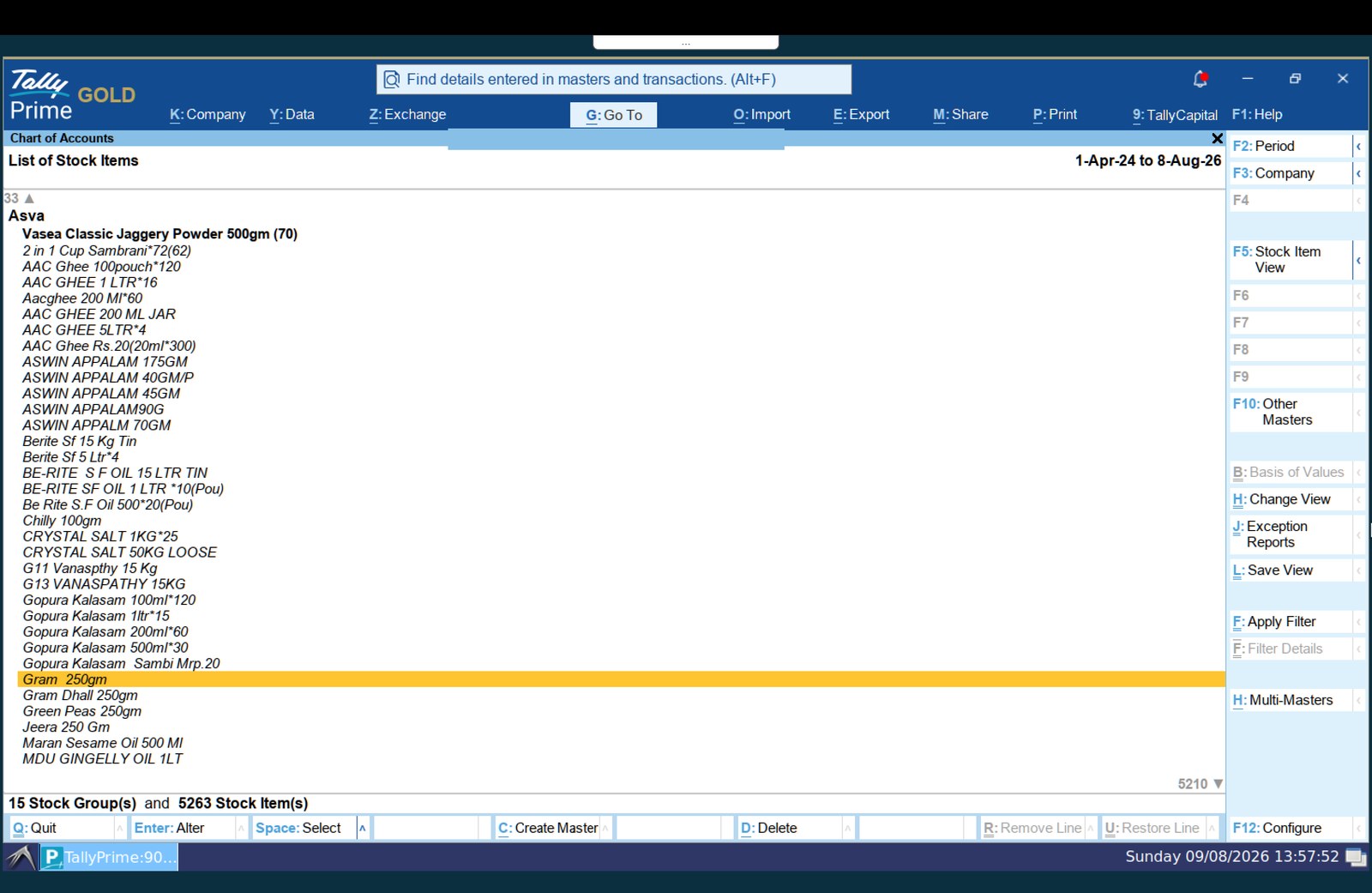
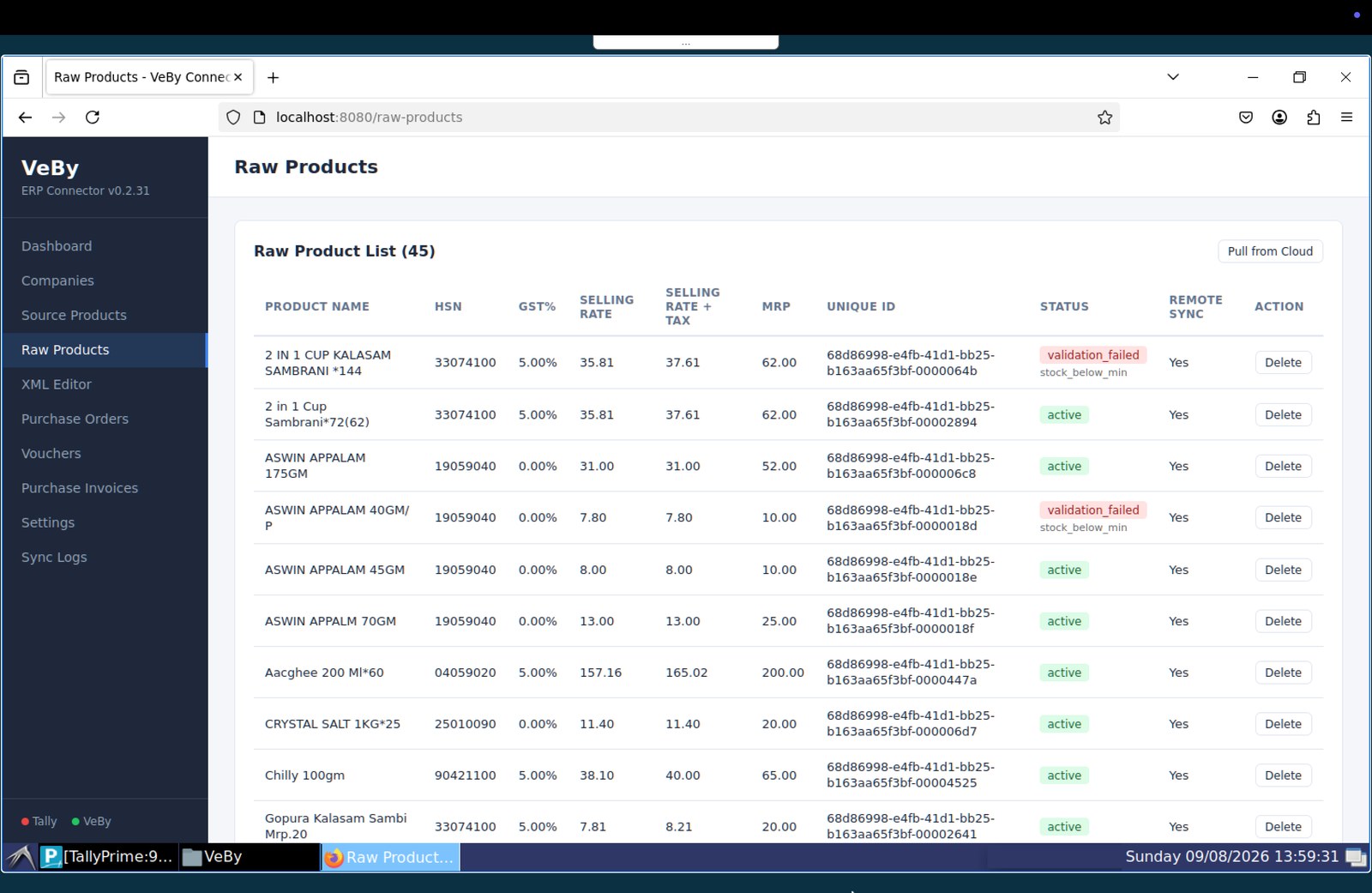
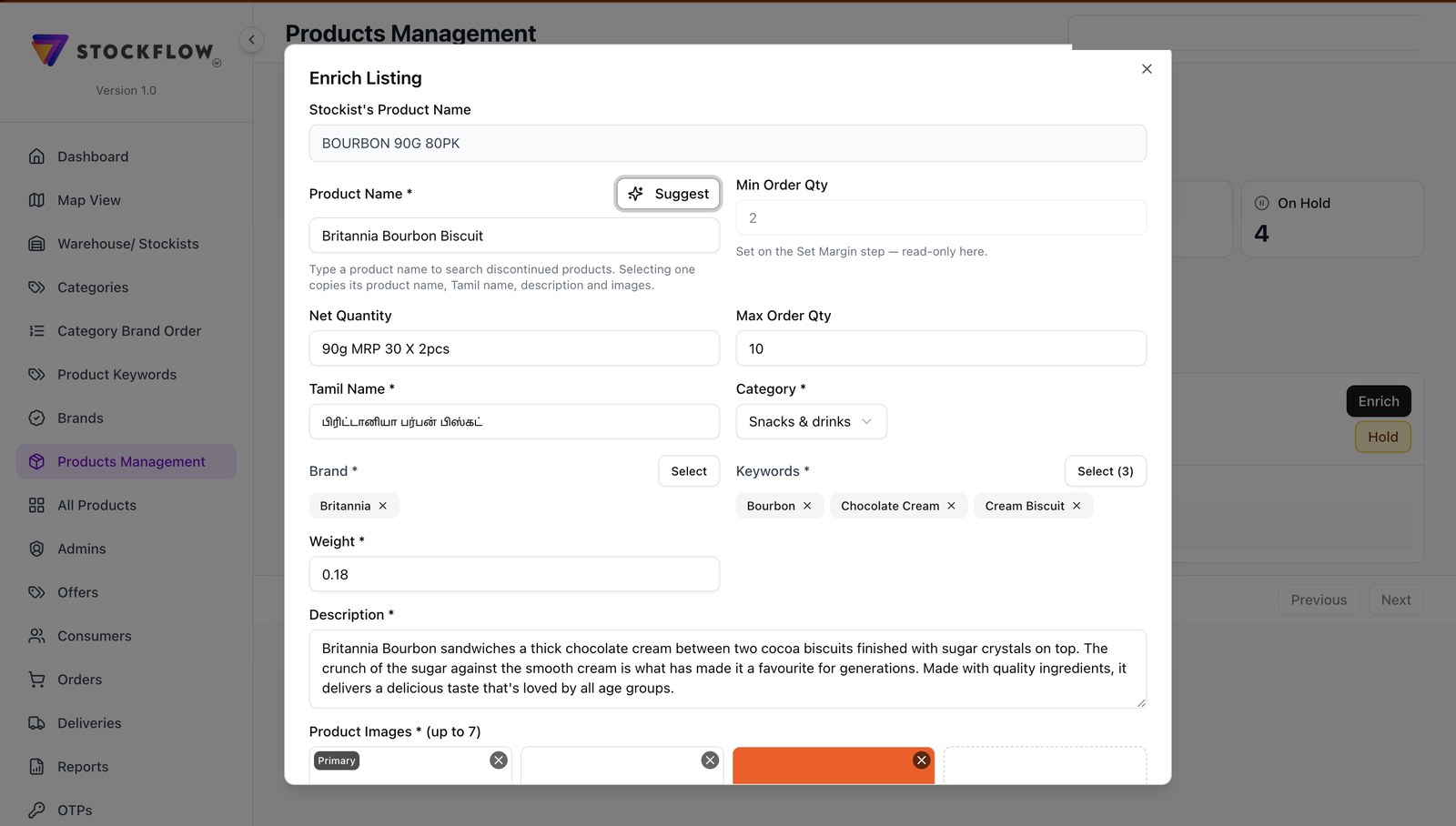
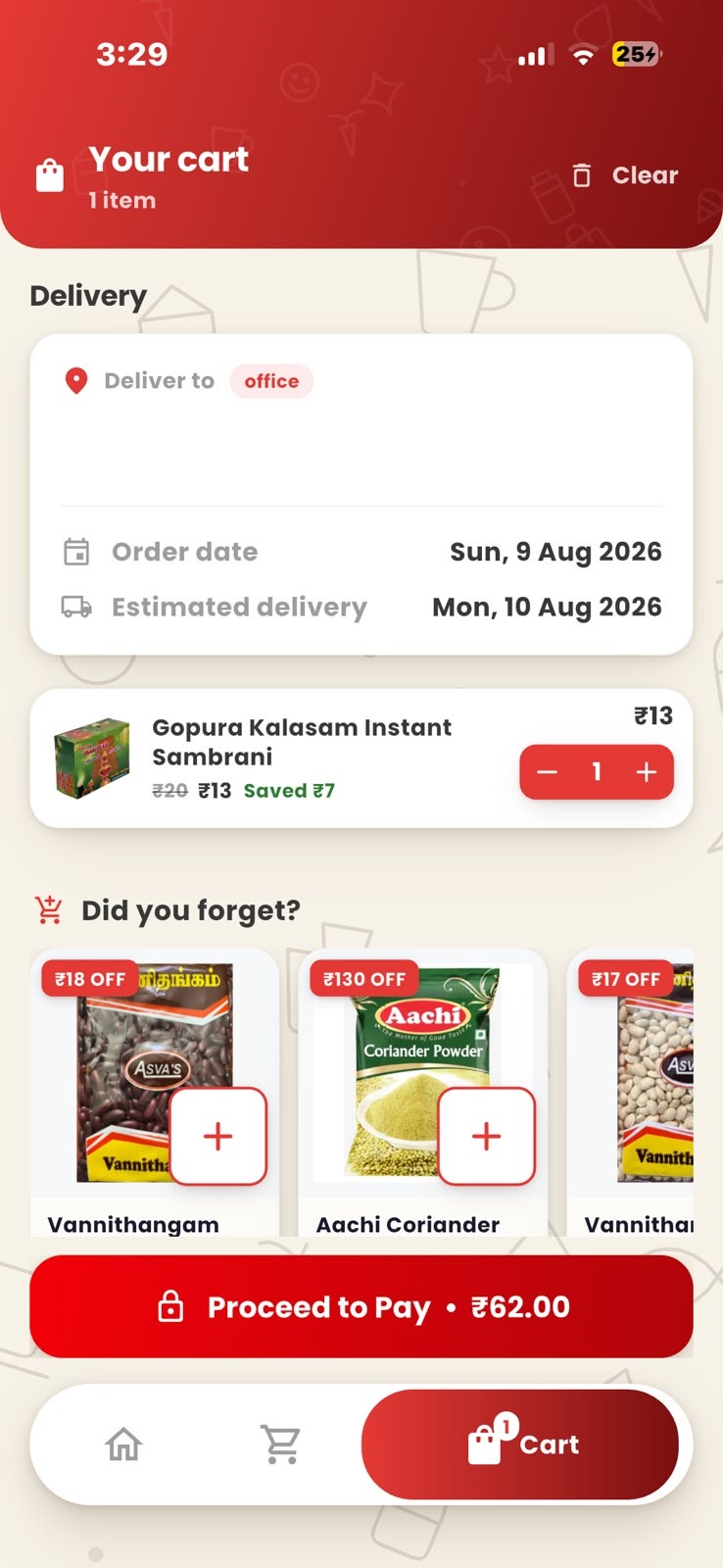
A product arrives in your billing software as shorthand and leaves as a listing — proper name, description, pack size, category, brand and photo. It happens on every new supplier and every new product, without anybody being assigned to it. Onboarding a new supplier stops being a week of somebody's life and becomes a session.
What it replaces
Someone sitting with a spreadsheet, working out that SOFT 100ML is a 100ml bottle of a particular dishwashing liquid, typing a description, finding a photo, and repeating that several hundred times per supplier. It is the least interesting work in the business, which is why it never gets done and the catalogue stays unsellable.
How it works
Each entry is read and a full listing proposed, field by field, with a confidence on each. A deterministic check requires the fields that matter before anything can go live; where the system cannot identify a product it leaves the field empty rather than guessing. A person confirms against the pack photo. The same pass keeps the brand list clean, which is where catalogues usually rot.
Measured so far
listings processed in a single pass
product names generated
Tamil-language corrections
brands, de-duplicated automatically
product photos placed, byte-verified
left blank rather than guessed
Recognise your own situation in this? That is usually the point to talk — gokul@theflutterfrog.com.
More results
Personalised proposals, in a fifth of the time
You do not need a designer in the loop to send a branded document. Write the content once and the system produces the PDF, the slides, the social images and a shareable link from the same source.
ReadEvery prospect gets a message written for them
You do not have to choose between personal and scalable. The system researches each business and writes to that business — then stops, and waits for you to send.
Read